Differentiation,
inquiry-based instruction, personalization, flipped classroom, gamification and
grit are among the top education buzz words for 2015. Some sound kind of scary,
like grit while others sound warm and fuzzy like personalization. Most of these
buzz words are also intertwined into different buzzwords that describe many educational
trends occurring at once. Out of the words mentioned above, only a few consists
of a technology backbone. Flipped classroom is one of these technology-rooted
buzz words. Exactly what is a flipped classroom? How is this buzz word being perceived
by bloggers and blog commenters?
According
to Horn and Staker (1) a flipped classroom is a type of rotational model within
the blended learning framework. The flipped classroom is “so named because it
flips the typical function of the classroom on its head. In a classroom that’s
flipped students consume online lessons or lectures independently, whether at
home or during a homework period on campus. Time in the classroom, previously
reserved for teacher instruction, is instead spent on what we used to call
homework, with teachers providing assistance as needed”.
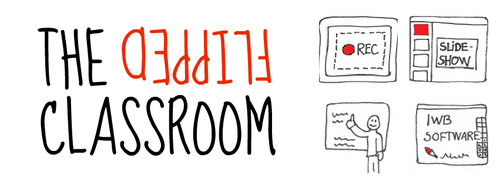
They
claim that this model can improve student learning in the following ways;
·
Allowing students to go through lecture material
at their own pace, making the content more personalized. Students who need to
review may do so at their discretion and students who excel can skip material
in which they are proficient.
· Time with the teacher is more student-centered
and focused on the creation of projects, discussing issues, practicing the
content and applying their knowledge. This ensures the teacher is present while
students go through the trial and error period of testing their understanding.
I’m sure you’ve already filled
your brain with a few questions and possible pitfalls. You are not alone. A
quick Google search for “flipped classroom” will return a few blogs that
highlight the pros and cons of
flipped classrooms. And some of those blogs are rich with comments either
defending flipped classroom models, or comments asking questions and challenging
the reality of a flipped classroom.
One user commenting on the
Education Next article (2) with “If every class uses this method,
students receive twice as much instruction in the course of a week as they
would by simply attending school–the obligatory hour per class in school and an
additional hour per class outside of school to learn the material (plus their usual
homework?)”. Another, on Schools of Thought (3) “It would be interesting to
know exactly how much content is expected to be watched/researched/absorbed in
an evening, so for a child in 5 classes (Math, English, Science, Social
Studies, Elective/Language/etc.) – how much home learning would be required?”
At first these comments doesn’t make much sense. Most
of the literature on flipped classroom pretty clearly states that teachers
should be careful when assigning more work than what can be reasonably
completed both during class and outside of school. According to the Flipped Classroom Field Guide (4) “To avoid overworking your
students, try reducing their homework by focusing your learning goals and
trimming unnecessary content. If you are converting a dense, traditional
lecture to a flipped class, take this opportunity to remove content that only
tests student recall and does not further you’re learning goals. Instructors
could also try reducing class time to compensate for the increased amount of
out-of-class work.”
Further thought about the user’s comment regarding extra work and
out of school time required by students raises the question of scheduling. How
exactly do you schedule a flipped classroom? Most of us are used to a more
traditional schedule with 40-60 minute classes. Others are blessed with block
scheduling. Both can be “flipped”, with block scheduling being a little more
workable as is that a traditional period schedule.
Most sources refrain
from suggesting a schedule for flipped classrooms. They claim that flipped
classrooms are not one size fits all, and therefore there is no correct set-up
or schedule. However, an EdTech (5) article mentions the almost seamless
flipping of a block schedule classroom. “An advantage of Block
Scheduling is the additional class-time available for group assignments and
collaborative projects that serve to reinforce learning and improve critical
thinking skills, particularly evaluation and creativity.”
With a block schedule there is “work
time” immediately following “lecture time” (assuming the teacher doesn’t blab
the entire block). Students easily transfer the concepts without feeling a
disconnection between what is covered in lecture and what is done during
work/project time. Also, Edtech hints at one important fact, not all flipped
classrooms require outside of class work. Some classes, especially those with
block schedules, are able to give the students time to work through lecture
materials and then transition to the work period (where a project, discussion
or practice takes place) all while in the brick and mortar classroom!
Others see flipping as a scapegoat for teachers. Robinson Meyer from the Atlantic (6) wrote about study findings relating to improved student achievement in a flipped setting. Commenters were split on the findings and questioned if flipping was really in the best interest of the students;
Wonderful.
We have somehow discovered that the old methods of the diplomia mills and
correspondence schools are "better" at teaching students than
traditional college courses. American higher eduction is headed for ruin. You
people are insane.

No comments:
Post a Comment